Some speakers inform.
Some inspire.
I rewire.

Mental fitness keynotes for conferences, leadership offsites and all-staff days. New Zealand wide, and wherever else you need me.
Guinness World Record holder. Two-time TEDx speaker. Three books. Founder of Live More Awesome. Finalist, New Zealander of the Year & New Zealand Innovator of the Year.
Companies That Have Trusted Me With Their People...
What The Room Feels Like
Most “wellbeing” sessions have a shape your people already know off by heart, where someone stands up and tells them mental health matters, hands out a breathing exercise nobody will ever do again, and everyone claps politely because it would be rude not to, and then they all go back to their desks completely unchanged.
That’s not this.
What it looks like from the back of the room is roughly this: people laugh a lot more than they expected to at a talk about mental health, then somewhere in the middle it goes very quiet, because I’ve said out loud the thing most of them have been carrying around and not saying, and by the end they’ve got one or two ideas they can actually use the next day and share with their family. But mostly importantly; they have a new understanding of a way forward.
The way I get there is by talking about my own mess. I spent 11 days swimming the length of the Waikato River on a lilo, built the world’s longest waterslide, and walked the length of New Zealand in 90 days, and all of that came out the other side of serious depression I had no idea how to get out of. The adventures are the funny part. The reason they exist is the useful part.
I’m not a psychologist and I don’t pretend to be one. I’m more like a personal trainer for your mind; I can’t do the reps for you, but I can show you what to do, why it works, and how to keep doing it when nobody’s watching.
Who Books Me?
Kinda everyone!
Conferences tend to book me at the start to set the tone, or after lunch to bring the energy back. Leadership offsites where the strategy work is done and you need something that isn’t strategy, but moves it forward. All-staff days, Mental Health Awareness Week, roadshows, sales kick-offs, and the annual get-together where you’d quite like people to leave feeling like human beings rather than a headcount. All of it.
It works from a boardroom of twenty up to the 2,300 I’ve spoken to in a single room, and the talk changes a lot depending on which of those I’m looking at. The ideas don’t.
Mental health doesn’t discriminate, which is the useful thing about it as a topic. Every single person at your event has mental health in exactly the same way they have physical health, so there’s nobody in the room this doesn’t apply to, which is not something you can say about most conference sessions.
My Three Current Keynotes
I’ll customise any of these to your event theme, and I’ve got a 15 years of older material to pull from if something else fits better. We’ll work that out before the day so that it works best for your people.
Calm Amid the Chaos
The world is chaotic and it isn’t about to stop being chaotic, so the question isn’t how to make it calm down, it’s how you find your own calm inside it. This one is about perspective and about the two skills underneath everything else: being able to observe your own thoughts rather than being dragged along by them, and being able to calm your nervous system on purpose rather than waiting for the situation to change.
Best for: high performers under pressure, senior teams, anyone mid-restructure or mid-crunch.
They leave able to: notice when they’ve been hijacked, and do something about it in the moment rather than three days later.
Connection is the Cure
The science on connection is not remotely ambiguous, and yet we’ve built a working world that quietly strips it out. This one covers the three connections that do the heavy lifting; to yourself, to the land, and to each other, and why the last one is the one your organisation is most likely getting wrong without meaning to.
Best for: all-staff days, hybrid and distributed teams, anywhere the culture has gone a bit thin.
They leave able to: name what’s actually missing, and start rebuilding it without waiting for a policy to be written.
Change Your Beliefs,
Change Your Life
Nothing changes if nothing changes, which everyone nods along to and then nobody does anything about, because the beliefs running the show underneath aren’t up for discussion. This one goes after those. Self-awareness, Radical Ownership, and the brutal honesty required to admit what you’ve been telling yourself isn’t serving you anymore.
Best for: leadership groups, teams facing a big shift, conferences with a change or transformation theme.
They leave able to: spot the belief driving a behaviour they’ve been trying and failing to change.
Why It Works
Real.
I’m not reading you a literature review. Everything in the talk is something I’ve done, failed at, or clawed my way through, and audiences can tell the difference immediately.
Funny.
It’s a talk about mental health that people enjoy. That sounds like a small thing but it’s the whole ballgame, because nobody absorbs anything when they’re not engaged.
Practical.
People walk out with something they can do, not something they can agree with.
Connected.
I read the room and I speak to all of it. The CEO and the person who’s been on the tools for thirty years both get something, which is harder than it sounds and is the thing event managers keep mentioning afterwards.
Testimonials... (Some people have said nice things)
“Jimi held 240 people gripped in his stories and you could feel them being moved emotionally and intellectually. We were all challenged individually and that can only strengthen us and our organisation. So positive, demanding and rewarding”
Rob Campbell – Chairman, Sky City & WEL Networks
“He was bloody great. Jimi tells a wonderfully honest and frank tale that really hit home with the men and women of the Navy who were there. He really made a difference to our Navy, I can’t ask for more than that.”
Jack Steer – Chief of the New Zealand Navy
“Jimi has a really powerful message to convey around mental health, which he does unbelievably well.”
Sir Stephen Tindall – Founder Warehouse Group
“Jimi was an absolute hit, reaching a high 97.5% audience engagement score in our post day survey.”
Scott Wilson – BNZ
Awards
Along the way I picked up a couple of things:
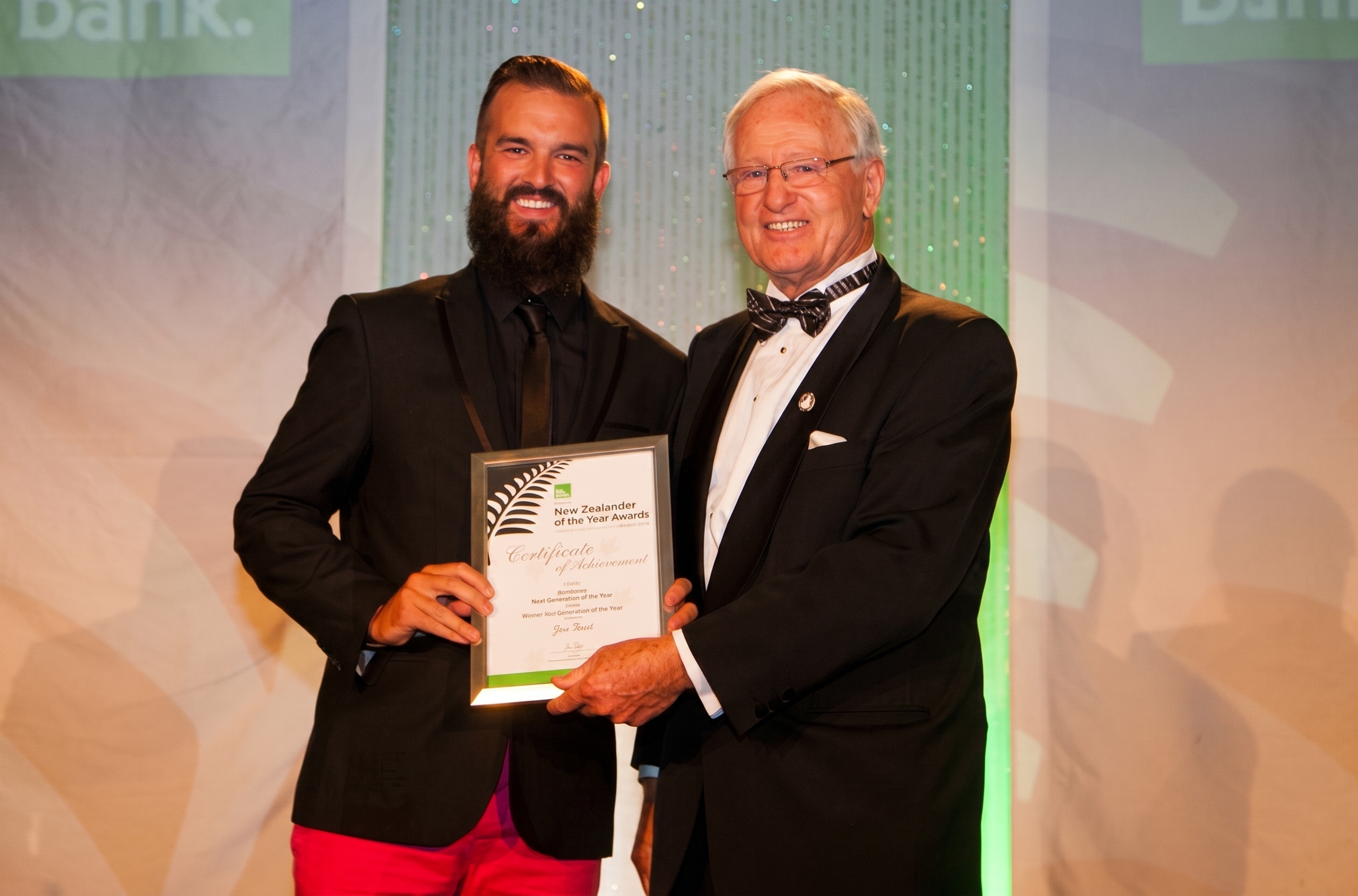
Guinness World Record for the world’s longest waterslide, finalist for the 2014 New Zealander of the Year, finalist for the 2014 New Zealand Innovator of the Year, opening speaker at TEDxAuckland 2013, Hubbards “Amazing Hero” grant recipient and the inaugural Kevin Roberts Entrepreneurship & Innovation Scholarship… Plus I won a few tennis tournaments along the way if that helps?!
The Business Case
The Unromantic Version
If you need to justify the line item to someone who doesn’t care how the room felt, here it is. New Zealand lost close to 13 million working days to absence in 2024, at a direct cost of around $4.2 billion, which is up nearly 60% on 2020. PwC’s return on investment analysis for the National Mental Health Commission put the average return at $2.30 for every dollar spent on creating a mentally healthy workplace, and Deloitte UK’s 2024 Mental health and employers: the case for investment puts the average return at £4.70 per £1 .
A mental fitness keynote on its own doesn’t fix any of that. What it does is get an entire organisation to opt in at the same moment, which is the bit every wellbeing programme struggles with and the bit I happen to be good at.
Logistics
The Practical Stuff
Keynote. 45 to 90 minutes. Medium to large audiences. This is the main event and it’s built to be one.
Talk. 20 to 45 minutes. Any size. A shorter impact piece for when the programme is tight.
Chat. 20 to 60 minutes. Small to medium. Informal, closer in, better for going deep on something specific.
Workshop. 3 to 4 hours. Small to medium. Covered properly on the workshops page.
Where. Based in Tauranga, New Zealand, available nationwide. Overseas bookings are fine, we’ll just talk about logistics.
Tech. I bring my own laptop and run the deck myself from the stage, and I need a lapel or headset mic because I move around a lot. Full details on the resources and requirements page, which also has photos, my bio, and the intro I’d like your MC to use.
Books. If you want people to leave with something physical, my three books work well as a takeaway, and they’re a decent framework to keep the thing going after I’ve left.
F.A.Q
What does it cost?
Keynotes, talks and chats run from $2,500 to $6,000 plus GST. Half-day workshops are $5,000 plus GST. Those are budgeting numbers rather than a quote, and they don't cover travel & accommodation if needed. If you're a B Corp, an education provider or a purpose-aligned not-for-profit, I may be able to give a better price. My assignment of yearly free speaking engagements will probably be already taken though...
Most speaker sites won't tell you any of this, which I've always found a bit odd, given it's the first thing you need to know.
Do I have to go through a bureau/agency?
No. I'm not represented by one, so you're dealing with me directly, which means there's no agency margin in the fee, and the person you email is the person who turns up.
Will it suit my audience?
Almost certainly. Mental health isn't a niche interest; everyone in the room has it whether they think about it or not. I've spoken to boards, to construction crews, to the Navy, to universities, and to conference rooms full of people who'd rather have been at their desks, and the thing I get told most often is that I seem to fit in, despite quite obviously not fitting in.
Can you tailor it to our theme?
Yes, and I'd prefer to. We'll have a proper conversation beforehand about your audience, what's going on for them, and what you want them walking out with, and then I'll shape the talk around that.
How far ahead should we book?
As early as you can, particularly for the second half of the year when conference season gets busy. That said, I've filled a lot of last-minute gaps, so if your speaker has pulled out two weeks before the event, ask.
What are you like to work with?
I'm aware I'm the one writing this, but scroll back up and you'll find a pile of event managers saying the same thing, which is that I'm easy. I turn up early, I answer emails, I roll with whatever the day throws at us, and I don't have a rider.
But I do request pink M&Ms, frozen, in a stemless wine glass, before and after the presentation. Won't go on without them.
Do you do virtual events?
Yes. Fully online and hybrid both work, and I've done enough of them to know how to hold a room I can't see.
Jimi In Action...